Eigha: The Elegant Script Font for Modern Designers
Finding the right typeface for a project can feel like searching for a missing piece of a puzzle. You need something that communicates the right tone, maintains readability, and brings a distinct personality to the design without overwhelming the message. Eigha is a script font that strikes this balance beautifully. It draws inspiration from the fluidity of traditional calligraphy but adapts it for a contemporary audience, making it a versatile tool for designers, marketers, and business owners looking for a creative font that feels both timeless and current.
The Anatomy of Eigha: Why It Works
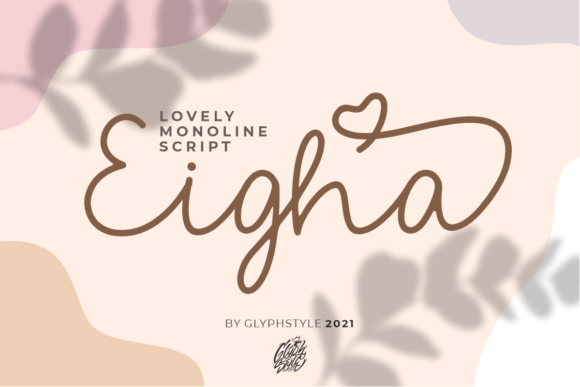
Typography is rarely just about the letters themselves; it is about the white space between them and the flow of the line. Eigha is designed with a specific visual rhythm that sets it apart from standard handwritten fonts. It avoids the common pitfalls of script typefaces—it is neither too thin to disappear on screen nor too thick to look clumsy in print. Instead, it offers a balanced weight that holds up well across different media.
The visual characteristics of Eigha are defined by its elegant connections and varied stroke widths. While it mimics the fluid motion of a brush or pen, the letterforms are refined and stable. This gives the font a sense of professionalism that is often lacking in casual scripts. When you look at the glyphs, you will notice a contemporary atmosphere mixed with impeccable form. It is a premium font that feels expensive and intentional, perfect for projects where brand perception is a priority.
One of the practical advantages of using Eigha is its accessibility. Because the font is PUA encoded, you do not need advanced design software to access the decorative elements. Whether you are using a professional suite or a basic editor, you can easily access the swashes and alternate characters. This feature allows for significant customization, enabling you to tailor the typography to fit the specific mood of your project without technical headaches.
Strategic Applications: Where to Use Eigha
Understanding where a font fits best is just as important as the font itself. Eigha shines in scenarios where elegance and personality are required, but it must be used with strategic intent to maximize its impact.
Branding and Logo Design
For businesses in the lifestyle, beauty, fashion, or luxury sectors, a script font can be a powerful tool for brand identity. Eigha works exceptionally well for logo design because of its legibility at various sizes. It conveys a sense of artisanal quality and sophistication. However, it is best used for the primary wordmark or a monogram. If your brand name is long, consider using Eigha for the accent text or tagline, pairing it with a clean sans serif font to ensure the logo remains readable and scalable.
Editorial Design and Publishing
In the world of publishing, typography sets the stage for the reader's experience. Eigha is an excellent choice for chapter titles, pull quotes, or drop caps in editorial design. Its flow guides the eye and adds a touch of narrative flair to the page. For bloggers and content creators, this font can transform a standard header into a visual focal point, increasing audience engagement by making the content feel more curated and high-value.
Packaging Design and Print
Physical products require typography that interacts with textures and materials. Eigha is ideal for packaging design, particularly for product labels, wedding stationery, or greeting cards. The "not too thin, not too thick" construction ensures that the text prints crisply without filling in, even on textured paper stocks. It adds a tactile quality to the design, suggesting that the product inside is crafted with care.
Digital and Social Media Graphics
In the fast-paced digital environment, standing out is difficult. Eigha can be used to create striking social media graphics, such as Instagram quotes, sale announcements, or story headers. While body text should almost always remain a standard serif font or sans serif for screen readability, using Eigha for callouts or short phrases adds a human touch to digital interfaces. It softens the hard edges of digital screens and makes the content feel more personal.
Design Principles: Pairing and Readability
A creative font like Eigha rarely works in isolation. To build a visual hierarchy, you need to pair it with a typeface that complements its style without competing for attention.
The Contrast Rule: Script fonts generally pair best with geometric or humanist sans serifs. The irregular, flowing nature of Eigha provides a beautiful contrast to the structured, clean lines of a sans serif like Montserrat, Roboto, or Open Sans. This contrast helps define the hierarchy, making it clear which text is the header and which is the supporting information.
Readability Considerations: While Eigha is designed for legibility, it is still a script font. It is not intended for long blocks of body copy or small legal text. Use it sparingly for maximum impact. If you are using it for a headline, ensure the font size is large enough to appreciate the details of the swashes. On the web, ensure there is sufficient line height (leading) so that the descending loops of letters like 'g' and 'y' do not collide with the text below.
Evaluating Project Fit: Before committing to Eigha, ask yourself about the tone of your project. Is the goal to convey trust and stability? A serif font might be better. Is the goal to convey innovation? A modern typography sans serif works. But if the goal is to convey elegance, warmth, personality, or luxury, Eigha is likely the right choice. It is a display font, meaning it is designed to be seen and admired, not just read.
Practical Implementation and Licensing
When integrating a new typeface into your workflow, practical considerations matter. Since Eigha is a commercial font, it typically comes with licensing that allows for broad usage, but it is always wise to review the specific terms for client work or mass-produced merchandise.
Take the time to explore the full character set. Because Eigha includes alternates and swashes, you can create a custom look simply by swapping out a few letters. This is particularly useful for logo design or monograms where you want a unique connection between specific letters. Treat the font as a set of design assets rather than just a static alphabet.
Ultimately, Eigha is a tool for refinement. It brings the beauty of classic calligraphy into the modern era, offering a solution for anyone looking to elevate their visual communication. Whether you are designing a wedding invitation, branding a boutique, or crafting a social media campaign, this font provides the sophistication and flexibility needed to make your work stand out.